 Fides
WPC decking construction, materials, profiles, installation, price drivers and the checks that separate factories from traders.
What Is WPC Decking? The Complete Guide for Buyers & Importers
What Is WPC Decking?
WPC decking — short for wood plastic composite decking — is an exterior flooring board made by extruding a heated blend of recycled wood fiber, thermoplastic resin (usually HDPE) and functional additives into planks that look like timber but resist rot, insects and moisture. It needs no painting, staining or sealing, and most boards ship with a 10–25 year warranty.
Key Takeaways
- 60/30/10 recipe: most wpc decking is 55–60% wood fiber, 30–40% HDPE polymer and roughly 10% additives (pigments, UV stabilizers, coupling agents).
- A USD 4.66 billion market growing at 13.3% CAGR: Grand View Research sizes the composite railing and decking market at USD 4.66 billion in 2025, on track for USD 12.64 billion by 2033.
- China holds roughly 40% of global capacity: Chinese factories hold an estimated 38–43% of world wood plastic composite production capacity, so nearly every importer's supply chain passes through China.
- Three profiles, three price tiers: hollow wpc decking starts around USD 12.5/sqm FOB; solid boards sit in the middle; co-extrusion (capped) boards run USD 19–35/sqm FOB with the longest warranties.
Before you place any order, read this page end to end, then start your sourcing with the main buying guide.
What WPC Material Is Made Of
Every wpc decking board is a three-part recipe. The exact ratio varies by factory, but the ranges below hold across the product listings and EPDs published by Chinese manufacturers:
| Component | Typical share | What it contributes |
|---|---|---|
| Wood fiber (recycled hardwood or softwood flour) | 55–60% | Stiffness, weight, wood look and feel |
| HDPE or other thermoplastic polymer | 30–40% | Waterproofing, rot and insect resistance |
| Additives | ~10% (5–12%) | Color, UV protection, processing behavior |
Published formulas cluster around two ratios. The supplier datasheets and EPDs below are all public product documents:
| Published by | Wood fiber | Polymer (HDPE/PE) | Additives |
|---|---|---|---|
| Environdec EPD (EU-market board) | 60% | 30% | 10% |
| Ocox hollow terrace decking | 58% | 32% | 10% |
| NeoTimber (UK) | 60% | 35% | 5% |
| Xianfeng (Bossgoo listing) | 55% | 35% | 10% |
| Hosung (Anhui) | 60% | 30% | 10% |
Expect 55/35/10 and 60/30/10 as the two most common published formulas. Boards listing 50% wood or less, or 15% additives or more, deserve a direct question about what the recipe is hiding.
The additive package is where cheap and premium boards separate. Ask your supplier to name each one:
- Coupling agents (maleated polyolefins): bond wood fiber to plastic; the single biggest quality lever in the mix
- UV stabilizers and antioxidants: slow fading and surface chalking
- Pigments: iron-oxide-based colors hold longer than organic dyes
- Lubricants: help the melt flow through the extrusion die without burning
- Anti-fungal / anti-mold agents: protect the fiber fraction in permanently damp climates
Boards made with recycled HDPE are normal, not a defect — several export mills openly specify recycled HDPE in their datasheets. Two checks before you sign: ask the mill to define its recycled grade (you want clean, single-stream flake with consistent melt flow, not mixed post-consumer waste), and confirm the wood flour is dry hardwood fiber, not mixed sawmill waste.
How WPC Decking Is Made: Extrusion in Seven Steps
Wood plastic composite decking is an extrusion product, not a glued or pressed one. The board leaves the line as one solid (or structured) profile — this is why there are no glue lines to fail outdoors.
- Dry the wood flour. Fiber is dried and screened to a controlled particle size. Wet fiber is the main cause of blown boards and surface pitting.
- Blend. Wood flour, HDPE pellets and the additive package go through a high-speed mixer into a uniform dry blend.
- Melt. The blend runs through a twin-screw extruder that heats it until the polymer melts and wets the fiber.
- Extrude. The melt is pushed through a profile die that shapes the cross-section — solid, hollow, or grooved.
- Texture. Still-warm boards pass embossing rollers or brushes that press the wood-grain pattern into the surface.
- Cool and calibrate. Water-cooled calibration dies lock the width and thickness to the listed tolerance (usually ±0.5 mm).
- Cut and pack. Boards are cut to export lengths — 2.2 m, 2.9 m, 3.6 m, 4.0 m and 4.88 m are the standard set — and strapped into export bundles.
A factory tour checklist: look at the dryer, the mixer capacity, and the number of extrusion lines — 20+ lines is a strong export-capacity signal, so follow it with a question about what share of output actually goes to export. Ask where the HDPE comes from and whether the recipe is locked per production batch or adjusted weekly.
WPC Decking vs Composite Decking: What the Terms Actually Mean
Buyers search for both terms, and in trade usage they overlap almost completely. Here is the relationship without the marketing spin:
| Term | What it means | Wood content? |
|---|---|---|
| Composite decking | Umbrella term: any board blending plastic with a natural or mineral filler | Depends on type |
| WPC decking / wood plastic composite decking | Wood fiber + thermoplastic (HDPE/PP) | Yes — 55–60% |
| Capped composite decking | A wpc decking core with a polymer shield co-extruded over it | Yes |
| PVC decking | 100% plastic, zero wood fiber | No |
| Mineral-based composite (MBC) | Polymer + mineral filler, no wood | No |
So: all wpc decking is composite decking, but not all composite decking is wpc decking. PVC decking sits under the "composite" label in US retail marketing, yet it contains no wood at all — a distinction that matters when your customer asks for "composite" and means the wood-look product.
The same material also travels under older names: eco wood, plastic wood, and natural fiber composite (NFC). If a supplier's catalog says "eco wood board," you are looking at wpc decking. In US and UK trade language, "composite decking" is the buyer term; "WPC decking" is the manufacturing and export term. A working import order normally carries both on the same spec sheet.
Practical rule: when quoting or listing, use "composite decking" for retail-facing text and keep the full phrase "WPC decking" on the technical spec line. That matches how your customers search.
Hollow, Solid and Co-Extrusion: The Three WPC Decking Profiles
This is the first decision in any order. The three profiles share the same material family but serve different price points and load cases.
Hollow WPC Decking
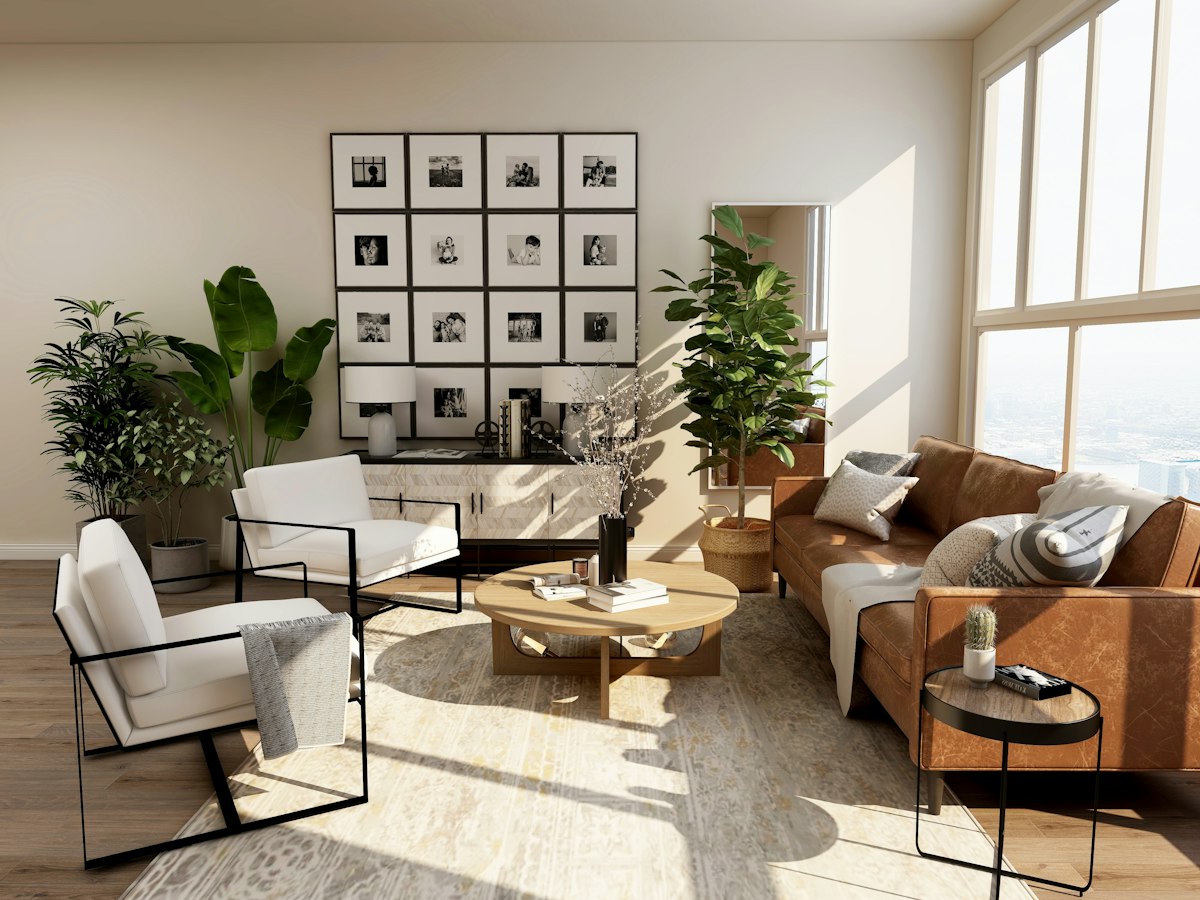
Hollow boards are extruded with open chambers running the length of the plank. Compared with solid board of the same size, hollow wpc decking is up to one-third lighter, roughly 20–30% cheaper per square meter, and easier to handle on site. The trade-offs: lower load rating (not for hot tubs or heavy furniture), visible open ends that need end caps, and closer joist centers. Hollow boards are the volume product for residential gardens, balconies and rental-property decks.
Hollow-board details buyers forget — all four of them:
- End caps are part of the order. Every cut or exposed end needs a matching end cap, or the chambers collect water, insects and debris.
- Slope matters. Manufacturers recommend a 1–2% slope so water runs out of the chambers; a level hollow deck in a freeze-thaw climate can split boards when trapped water freezes.
- Cavities run cable. The chambers take low-voltage garden lighting cable neatly — a selling point for landscapers.
- Mix profiles on big jobs. A common commercial spec is solid board on the main walkway and hollow board on decorative border areas, balancing load rating and cost.
Solid WPC Decking
Solid boards are extruded full-density. Manufacturer load tables list solid profiles up to 6,000 N, they feel and sound closer to real timber, cut clean at exposed edges, and suit commercial traffic — hotel terraces, restaurant decks, boardwalks. Solid wpc decking costs more and weighs more; freight per square meter is higher.
Co-Extrusion WPC Decking (Capped)
Co extrusion wpc decking runs two extruders into one die:
- Core: a standard wood plastic composite melt carrying the load
- Cap: a 0.5–1 mm polymer shield, extruded over the core in the same pass at temperatures above 180 °C
- Wrap: premium factories take the shield onto all four sides — the "360° cap" — including the bottom and inside the clip grooves
Boards capped on the top face only will still absorb moisture underneath. Capped boards are what US brands like Trex and Fiberon call "capped composite." The shield carries the UV inhibitors and pigments, which is why co-extrusion decking posts the strongest spec numbers among the three wpc decking profiles: water absorption of 0.5–1%, slip ratings R10–R11 (wet PTV 36+), fade resistance grade 4–5, and a 20–25 year service life. Expect to pay USD 19–35/sqm FOB for export-grade capped board.
The gap between first- and second-generation board shows up fastest in the buyer's own tests:
| Test | First-gen (uncapped) board | Co-extrusion (360° capped) board |
|---|---|---|
| Red wine / coffee / soy sauce spill | Soaks in within minutes; stains the fiber | Wipes off; liquids never reach the core |
| Fade resistance | Grade 3 | Grade 4–5 |
| Service life | 10–15 years | 20–25 years |
| Cleaning routine | Periodic deep cleaning | Soap and water only |
Two things to check on capped board anyway:
- Confirm the cap wraps all four sides — one-face-capped boards still absorb moisture from below and inside clip grooves
- Field-cut ends expose the core; suppliers recommend sealant or end caps on cut ends
- Deep-embossed capped surfaces compress the shield and cut surface porosity markedly — the reason embossed capped board is the common default spec for poolside and coastal projects
Standard Size Range in Export Catalogs
| Dimension | Typical range in Chinese export catalogs | Notes |
|---|---|---|
| Width | 135–150 mm | 140 mm is the export standard; 146 mm and 148 mm also common |
| Thickness | 20–33 mm | Hollow: 21–25 mm · Solid: 20–25 mm · Heavy commercial: 30 mm+ |
| Length | 2.2–4.88 m (some mills to 5.8 m) | 2.9 m and 3.6 m dominate container loads |
| Surface | Grooved / brushed / sanded / 3D embossed | Embossed faces hold less heat and hide scuffs |
| Color | 4–12 stock colors per factory | See the color range buyers actually stock |
For poolside, marina and shower-adjacent projects, capped boards are the default spec — see the pool deck selection notes.
Which Profile Fits Which Project
Match the profile to the application before you match it to a price:
| Application | Recommended profile | Reason |
|---|---|---|
| Residential garden / balcony / rental deck | Hollow | Lowest landed cost, light handling |
| Rooftop terrace | Hollow or solid | Weight limits may force hollow |
| Hotel, restaurant, retail terrace | Solid | Traffic load and cleaner cut edges |
| Public boardwalk / park | Solid or capped | Load rating plus easy cleaning |
| Poolside, marina, coastal | Co-extrusion capped | Salt, chlorine and constant moisture |
| Hot tub pad / outdoor kitchen base | Solid, reduced joist centers | Point loads above hollow rating |
This matrix also explains stock structure: importers who serve both trades and retail typically run hollow as the entry line, solid for commercial quotes, and capped board as the margin product.
Specifications to Check on Every Quotation
A price without a spec sheet is not a price. When comparing factory quotes, pin these six numbers first:
| Spec | Good export-grade target | Why it matters |
|---|---|---|
| Water absorption | <1.0% (capped: <0.5%) | Drives freeze-thaw survival and swelling |
| Slip resistance | R10–R11, wet PTV ≥36 or dynamic CoF ≥0.43 | The EN 15534-4 pass mark; liability on wet decks |
| Density (solid board) | ~1.1–1.3 g/cm³ | Proxy for fiber content and stiffness |
| Fade resistance | Grade 4–5 (ISO 105-A02 / grey scale) | Fading is among the most common retail warranty claims |
| Flexural strength | Per ASTM D7032 span rating, not raw MPa | Span rating is what building codes accept |
| Fire class | ASTM E84 flame spread report or EN 13501 Bfl/B1 option | Requested by US and EU commercial projects |
Quotation traps that cost importers money:
- Quote shows thickness only. Ask for the profile drawing — a 25 mm board can be hollow, solid, or capped, and they are different products at different prices.
- Test report from another profile. Match the report's product code to the exact profile and color you are buying.
Joist Spacing Rules by Profile
Composite flexes more than timber, so centers are tighter than a wood deck. Verified manufacturer guidance:
| Board type | Joist centers |
|---|---|
| Hollow board, residential | 300–350 mm |
| Solid board, residential | up to 400 mm |
| Any board, commercial traffic | 300 mm |
| Diagonal or chevron layout | 300–350 mm |
Never let an installer put composite boards on 600 mm centers — that spacing is for structural bearers, not deck boards. The full layout rules, incl. spans for hot tubs and heavy planters, are on the joist spacing page.
Standards and Certifications Importers Ask For
Two standards govern wpc decking quality worldwide, plus a set of factory-level certificates.
EN 15534 (Europe). A six-part standard family: Part 1 covers common test methods, Part 4 covers decking requirements. Key pass marks: pendulum slip test ≥36 PTV (or dynamic coefficient of friction ≥0.43), and a falling-weight impact test — 1,000 g hammer dropped from 700 mm onto ten specimens, with no fracture and no indentation deeper than 0.5 mm on solid board (hollow board may show cracks up to 10 mm). The standard also sets weathering and color-change, water-absorption and swelling, freeze-thaw cycling, and fungal-resistance requirements. EN 15534-4 is the document European distributors ask to see.
ASTM D7032-21 (USA). The US performance standard for wood-plastic composite deck boards, stair treads, guards and handrails. Passing products receive a span rating — the maximum joist spacing at which the board performs safely — plus creep-recovery, fastener-holding and flame-spread (ASTM E84) data. A D7032 span rating is the basis for ICC-ES code acceptance in the US.
The test categories behind the two standards, so you can read a lab report line by line:
| Property | EN 15534 route | ASTM D7032 route |
|---|---|---|
| Bending / flexural | EN ISO 178 three-point bend | ASTM D6109 |
| Slip resistance | PTV ≥36 or dynamic CoF ≥0.43 | Slip-resistance test |
| UV / weathering | Xenon-arc weathering, color change | ASTM D2565 / G154 |
| Freeze-thaw | Cycle test required | Required |
| Biological | Fungal resistance | ASTM D2017 (fungal), ASTM D3345 (termite) |
| Fire | EN 13501 where specified | ASTM E84 flame spread |
| Creep / long-term load | Part 4 requirement | Creep-recovery test |
| Fasteners | — | ASTM D1761 / D5764 pull-through |
If a lab report only covers bending and density, it is not a full standard test — the slip, weathering and biological blocks are the ones that fail in the field.
Factory and product certificates:
| Certificate | What it signals | Who asks for it |
|---|---|---|
| ISO 9001 | Production quality system in place | Most importers, all retailers |
| CE marking (EN 15534 route) | Legal entry for decking into the EU | EU distributors |
| FSC (where claimed) | Fiber traceability for eco claims | UK/EU retail chains |
| SGS / Intertek / TÜV test reports | Independent confirmation of the spec sheet | Anyone who checks |
| China GB/T 24508 / GB/T 24137 | Domestic standard compliance; export lines usually test to both | Wholesalers selling dual markets |
One caution: certificates circulate inside the industry. Always verify the certificate number against the issuing body's database and confirm it names the factory you are actually ordering from, not a sister plant.
Global Market Size and China's Export Position
The numbers explain why this category keeps attracting importers.
Grand View Research's composite railing and decking series runs like this:
| Metric | 2024 | 2025 | 2033 |
|---|---|---|---|
| Global market | USD 4.25B | USD 4.66B | USD 12.64B |
| US market | USD 0.99B | — | USD 2.87B |
That is a 13.3% CAGR from 2025 to 2033. Capped composite decking and railing already holds 63.3% of 2024 revenue — the largest segment — and North America accounts for 29.3% of global revenue. India is the fastest-growing country in the forecast, projected at USD 406.4 million by 2033. QYResearch's narrower composite-decking-only forecast lands at USD 10.98 billion by 2031 (16.3% CAGR). Different scopes, same direction: capped board is taking the category, and demand is spreading beyond the traditional US and European strongholds.
On the supply side, China dominates. Industry research puts China at 38–43% of global wood plastic composite production capacity, with roughly 2.1 million tons of capacity and about 1.65 million tons of actual output. Estimates of China's share of global wood plastic composite export volume run around 52% in recent reports — other large producers sell mostly into their own domestic markets, so China's share of internationally traded volume runs above its share of capacity. Vietnam and Malaysia combined sit at about 21% and growing; Southeast Asia is becoming the second sourcing base. For an importer, that concentration means three things: pricing is factory-driven, lead times are short (15–20 days per 20 ft container is standard), and your supplier-verification work decides whether the cheap end of that capacity is worth touching.
Container Economics
Decking is a volume product; freight decides your landed cost.
| Container | Decking-only load | With joists + accessories |
|---|---|---|
| 20 ft GP | 800–1,000 sqm | 750–850 sqm |
| 40 ft HQ | 1,230–1,260 sqm | 1,230 sqm |
Accessories (joists, clips, end caps) eat 50–100+ sqm of a 20 ft container, so dedicated accessory orders often ride with the next decking shipment. One planning rule buyers learn on the first order: wpc decking is heavy, so containers ship payload-limited — a 40 HQ carries only 25–30% more decking than a 20 ft despite roughly double the volume.
FOB Price Bands (2025, verified supplier listings)
| Product type | FOB China (USD/sqm) | Typical MOQ |
|---|---|---|
| Standard hollow wpc decking | 12.5–20 | 100–300 sqm |
| Solid wpc decking | 15–25 | 100–300 sqm |
| Co-extrusion / capped | 19–35 | 100–500 sqm |
| Premium 3rd-gen color co-extrusion | 22–35+ | 300–500 sqm |
One top-spec Sichuan mill publishes USD 35–50 ex-works for project-grade capped board — an outlier that shows where the premium end sits once inland freight and export handling are added on top.
Payment norms: 30% T/T deposit with balance against B/L copy, or L/C at sight for repeat orders. A full cost build-up — landed cost per sqm, duty, freight, and how to negotiate these bands — is on the wpc decking price page.
Warranties: What 10–25 Year Coverage Actually Means
Chinese export factories issue warranties in two bands, and the numbers matter less than the exclusions.
| Product line | Typical warranty |
|---|---|
| Hollow wpc decking | 10 years |
| Solid wpc decking | 10–15 years |
| Co-extrusion (residential) | 20–25 years |
| Co-extrusion (commercial) | 10–15 years |
| US brand comparison: Trex Enhance / Select / Transcend | 25 / 35 / 50 years |
For context on the US retail benchmark, Trex Transcend material sells around USD 9–12 per square foot — three to four times Chinese export pricing for a comparable capped board. That gap is the importer's margin.
Read the warranty like a lawyer. Verified exclusions from real Chinese manufacturer warranty documents:
- Pro-rated, not flat. AVID's 15-year residential warranty pays 100% in years 1–3, then steps down to 20% by years 13–15. Ten-year coverage does not mean ten years at full value.
- Labor never covered. Most warranties replace board only; removal and reinstallation are yours.
- Registration deadlines. Some factories require registration within 30 days of purchase — miss it and the warranty dies.
- Fade and stain clauses. "Fade resistance" usually covers fading beyond a stated grey-scale step, not any visible change.
- Excluded: installation damage, contact with fire or hot objects, acts of nature, and normal thermal expansion/contraction.
Checklist for any warranty: get it in writing in English, name the legal entity behind it (factory vs trading company), confirm it survives a factory ownership change, and keep the purchase contract, B/L and warranty certificate in one file. For upkeep requirements that keep the warranty alive, see how to clean composite decking.
WPC Decking vs Wood Decking: The Buyer's Quick Comparison
When your customer asks why composite costs more upfront, this table answers it.
| Factor | Pressure-treated wood | WPC decking |
|---|---|---|
| Material cost | USD 1.50–4.00 per linear foot (PT pine) | USD 2.30–11+ per linear foot (retail) |
| Annual maintenance | USD 150–450 (stain, seal, repairs) | USD 5–15 (soap and water) |
| Maintenance labor | Up to ~32 hours/year | ~4 hours/year |
| Lifespan | 10–15 years (softwood) | 20–30+ years |
| Repainting | Yes, every 2–3 years | Not possible — color is permanent |
| Splinters, rot, termites | Yes | No |
The lifetime-cost argument is the composite seller's main tool: US trade sources cite a wood deck's 10-year upkeep at USD 5,600–12,000+, which offsets most of the price gap. The honest counterpoints: composite runs hotter under bare feet in full sun (darker colors worst), and it cannot be refinished when the customer wants a new color.
Importer Sourcing Checklist: 24 Points Before You Order
Run this list against every supplier. A pass on 20+ means order; below 15, move on.
Supplier verification
- Factory visit done, or live video walkthrough of the extrusion lines, dryer and lab
- Export license and business registration match the invoice name
- Certificate numbers (ISO 9001, CE, test reports) verified against issuing bodies
- The supplier actually runs extrusion lines — traders resell at +10–20% with weaker after-sales
- Reference orders: ask for two buyers in your region who will take a call
Specification and sample
- Profile drawing received for the exact profile quoted (hollow/solid/capped)
- Sample boards in hand for every color you plan to stock
- Sample tested: cut one open to confirm core structure and fiber quality
- Water-absorption and slip test reports match the profile code on the quotation
- Density and span rating confirmed in writing for the joist centers your market uses
Quotation and pricing
- FOB price per sqm locked for 30 days with an exchange-rate clause
- Accessories quoted as a separate line: clips, starters, end caps, joists
- MOQ and price-break ladder in writing (100/300/500 sqm)
- Payment terms agreed: 30% T/T + balance against B/L, or L/C
- Freight-forwarder quote obtained on the same container math before signing
Quality and compliance
- Third-party pre-shipment inspection (SGS/Intertek) scheduled, with a 2-hour window to fix or re-select
- EN 15534-4 or ASTM D7032 documentation relevant to your destination market
- HS code agreed and printed on the invoice: 3925.90 (US HTS 3925.90.0000)
- US importers: duty math confirmed — 5.3% general rate plus Section 301 additional duty (currently 25% for China-origin, CBP ruling N337378); tariff stacks shift, so re-check at shipment date
- Warranty document in English signed by the legal entity you contract with
Shipping and after-sales
- Container loading plan received: decking + accessories packing list before the truck leaves
- Spare/replacement board policy in writing (typical: 1–2% free overage on container orders)
- Claims procedure defined: photo evidence, response time, credit vs replacement
- Reorder lead time committed for the same recipe and color code — color drift between batches is the most common repeat-order dispute
Tick all 24 and the order is routine. The most expensive mistakes importers report are almost always checks 4, 8 and 24: buying from a trader, trusting an untested sample, and color drift on the reorder.
Frequently Asked Questions
Q: What is wpc decking made of?
WPC decking is 55–60% wood fiber, 30–40% HDPE polymer and roughly 10% additives — pigments, UV stabilizers, coupling agents and lubricants — extruded into planks. The most common published formula is 60% wood, 30% HDPE, 10% additives.
Q: Is WPC decking the same as composite decking?
In trade usage, yes — wpc decking is the main type of composite decking. The umbrella term also covers capped, PVC and mineral-based boards; see the comparison table in the terminology section above.
Q: Which profile should an importer stock first: hollow or solid wpc decking?
Hollow board is the volume starter for residential and price-sensitive markets at USD 12.5–20/sqm FOB; solid board suits commercial traffic and premium ranges. The common three-line stock is hollow for entry, solid for commercial quotes, and capped board at the top.
Q: What warranty can I expect from a Chinese wpc decking factory?
Typical coverage is 10 years for hollow board, 15 years for solid, and 20–25 years residential / 10–15 years commercial for co-extrusion board. Get the warranty in English, check the pro-rating table and exclusions, and confirm which legal entity backs it.
Sourcing WPC Decking?
Send your specification, quantity, destination and timeline. Fides routes the request to relevant WPC decking companies.